
Seeing the #JTSRamah Connection in Action
Rabbi Mike Uram, Chancellor, JTS
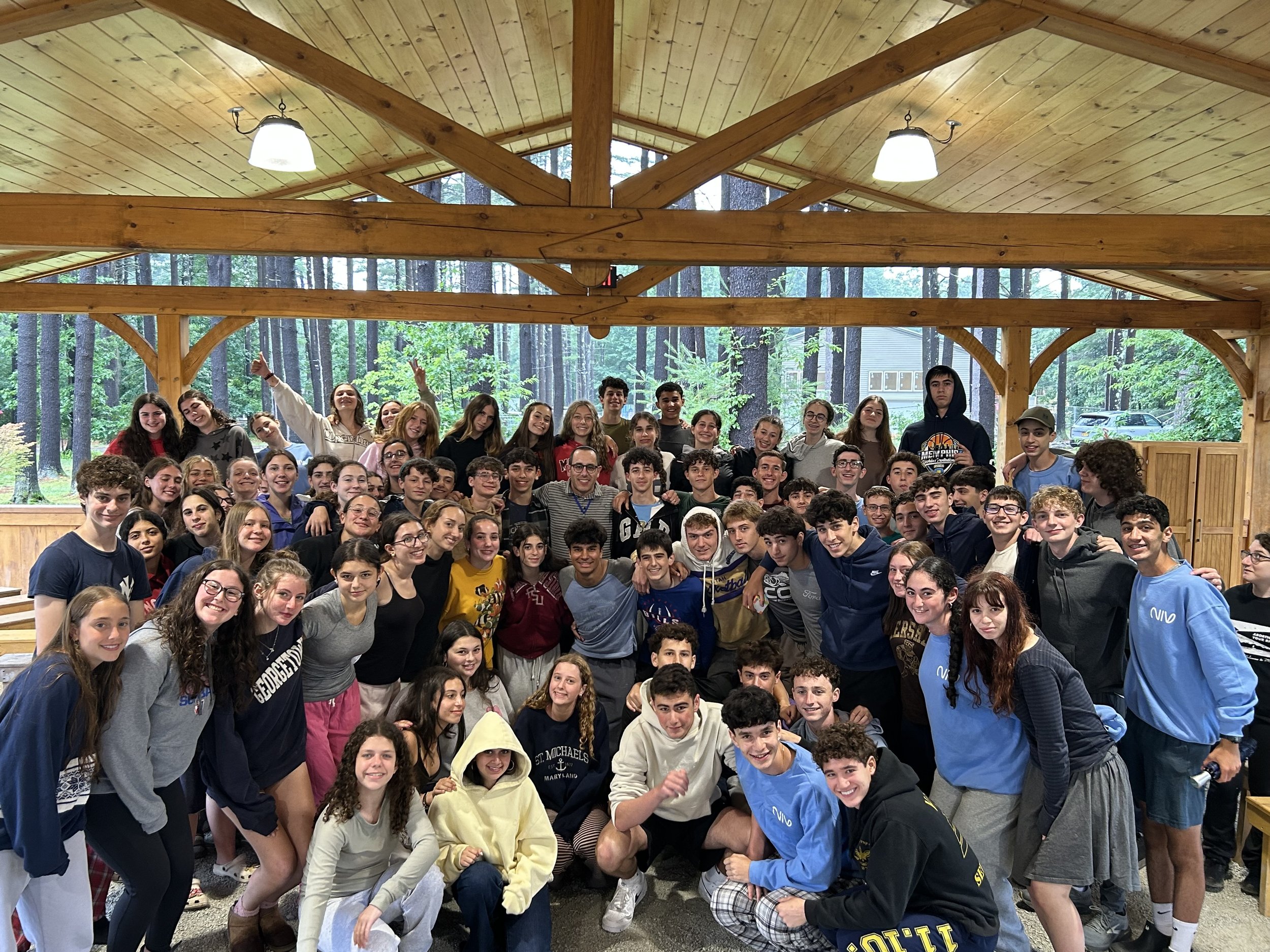
Chancellor Mike Uram at Camp Ramah New England (center of photo)
If I had to summarize my Ramah experience this summer, the first word that comes to mind is “amazing.”
During my visit to Camp Ramah New England, which came during my second week as chancellor, I had the privilege of meeting campers ranging from Ta’am, getting their first “taste” of Ramah, to intellectually curious rising 11th graders wrestling with deep fears about their own futures, as well as the future of humanity. I also spoke with rising 10th graders who are concerned about antisemitism and who have experienced it firsthand in their schools and communities.
During our time together, I shared some ideas from Jewish tradition and neuroscience about how to build a productive culture across political differences, a particularly relevant conversation for camp, where difficult political conversations can arise among campers and staff, as well as when they return to their schools and communities.
I focused on a midrash on the Book of Psalms that describes the Torah being given at Mount Sinai. Rabbi Yanai teaches that rather than receiving simple answers about what was permitted or forbidden, Moses was taught 49 reasons why something could be pure and 49 why it could be impure. Remarkably, the Hebrew word for “reasons” can also mean “faces,” suggesting that every question has many perspectives—no issue is just two positing sides; there are human stories, faces, and experiences that shape why people hold the opinions they do. This idea challenges today’s tendency to reduce complex issues to simple slogans and instead encourages us to embrace complexity and seek to understand the stories and experiences—the different “faces”—behind opposing opinions. The campers that heard this d’var Torah were all so eager to learn and courageous. They are thinking seriously about how to face the challenges of the world today while also seeking meaningful ways to engage with Jewish tradition, community, and one another.
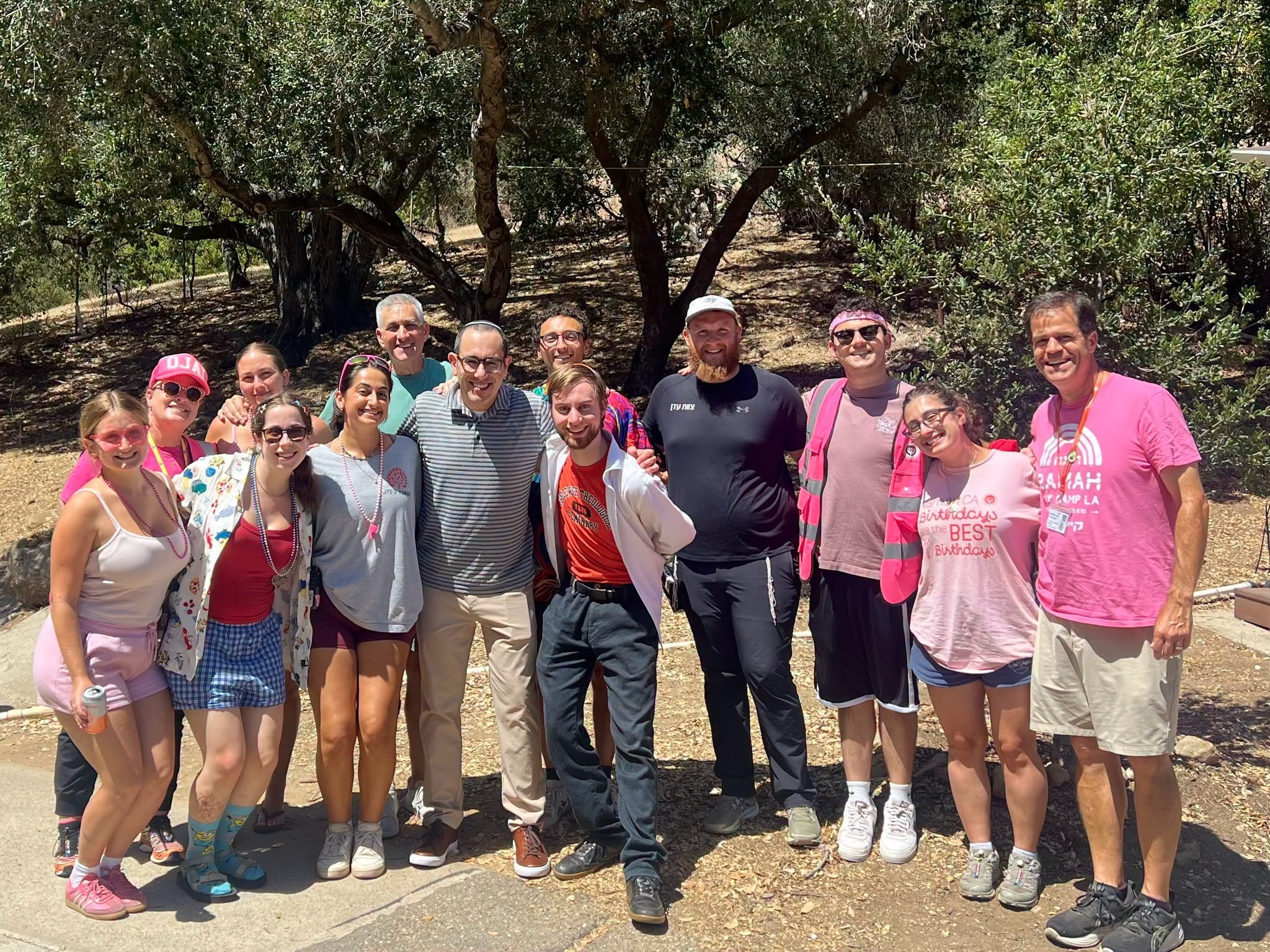
Chancellor Mike Uram at Ramah California, 7th from right
I also visited Camp Ramah in California, where I had the chance to experience Maccabiah. The passion, ruach, and energy surrounding this day of competition were unlike anything I had ever seen. And the wigs and tutus added an awesomely creative touch!
These visits reinforced what I had always heard about Ramah before becoming chancellor: the #JTSRamahConnection is enduring and deep. Many of the teens I met are interested in pursuing a JTS education, and we welcome them with open arms. Ramah campers already share so much of what makes the JTS community special.
Congratulations to all the Ramah directors, administrators, and staff on a successful and fruitful 2026 summer. And a special thank you to my hosts, Rabbi Ed Gelb, CEO of Ramah New England, and Rabbi Joe Menashe, CEO of Ramah California, who welcomed me into their camps. They gave me the opportunity to witness safe, happy, and engaged young people and to see the future being planted.
I wasn’t the only one who experienced a deep #JTSRamahConnection this summer. Randy Michaels, Vice Chancellor and Chief Operating Officer, visited every overnight Ramah camp. Many of our other senior leaders visited camps, met with students, toured facilities, and held engaging conversations. JTS graduate students served in leadership roles at several Ramah camps, while our undergraduates worked as counselors and specialty staff. And our alumni filled Ramah camps in a wide range of roles.
The JTS–Ramah connection is strong and unwavering. I’m excited to see how it continues to grow and flourish and to imagine all that we can build together in the years ahead.